Acid Reflux vs Bile Reflux: What Is the Difference?
“Acid reflux and bile reflux may share a similar sting, but their causes are different.”
If you’ve ever felt a burning sensation in your chest or a sour taste rising in your throat after eating, you’ve likely experienced acid reflux.
But that discomfort may not always be caused by acid. It could also involve bile reflux, a lesser-known condition that can cause similar symptoms.
Understanding the difference between acid and bile reflux is important because their causes and treatment can vary.
What Is Acid Reflux?
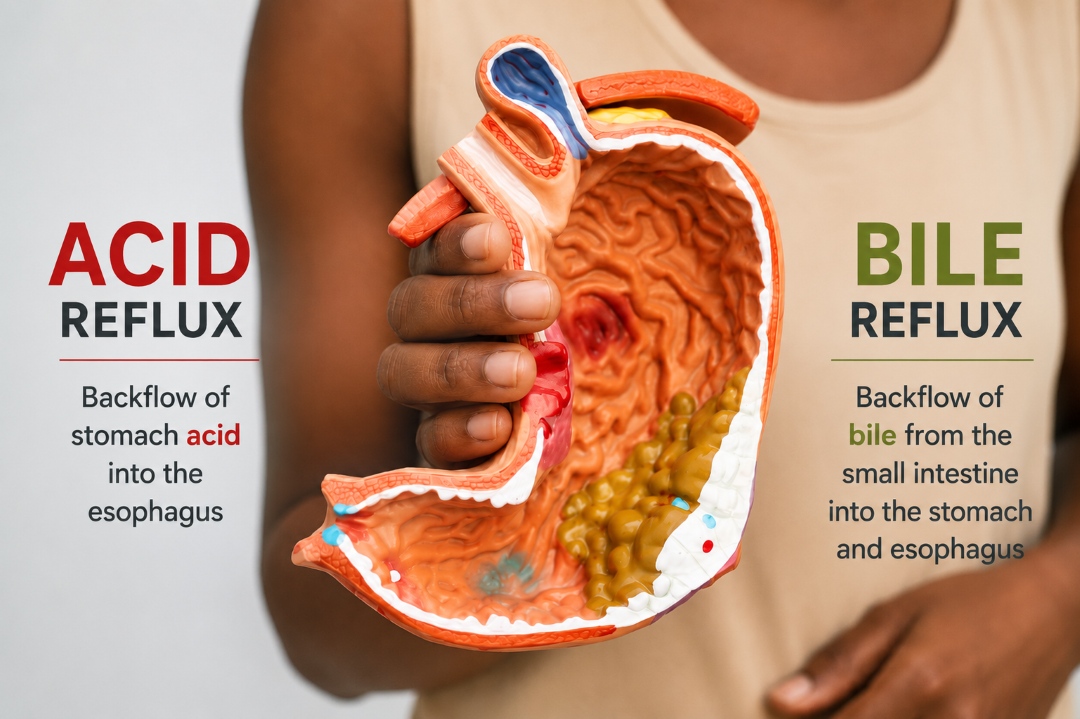
Acid reflux happens when stomach acid flows back into the esophagus because the lower esophageal sphincter does not close properly.
It can cause a burning feeling in the chest, especially after large meals or when lying down. Frequent acid reflux can develop into GERD, which may cause ongoing irritation and other complications.
Common Symptoms
Burning sensation in the chest or throat
Sour or bitter taste
Regurgitation
Bloating and frequent burping
Sore throat or cough
Difficulty swallowing
What Is Bile Reflux?
Bile is a digestive fluid produced by the liver and stored in the gallbladder. It helps the body digest fats.
Bile reflux happens when bile flows back from the small intestine into the stomach and sometimes into the esophagus. Although bile is not acidic, it can still irritate the digestive tract.
Symptoms of Bile Reflux
Upper abdominal pain after meals
Nausea or vomiting
Yellow-green fluid in vomit
Persistent cough or sore throat
Feeling full after eating small amounts
Acid vs Bile Reflux
Both conditions can feel similar, and some people may experience both.
Acid reflux involves stomach acid and often responds to antacids or acid-suppressing medicines.
Bile reflux involves bile and digestive enzymes and may not improve with acid blockers alone.
The two conditions can also occur together, making symptoms more persistent.
How Trapped Gas Can Make Reflux Worse
Gas can increase pressure inside the stomach, which may push stomach contents back into the esophagus.
Gas can come from swallowed air, carbonated drinks, chewing gum, or the digestion of certain foods. When it becomes trapped, the increased pressure can make reflux symptoms feel worse.
This is where anti-flatulent ingredients such as simethicone can help.
Simethicone helps gas bubbles combine so they can be expelled more easily. This can reduce bloating and the pressure that may worsen reflux symptoms.
How RelsidPlus Can Help
RelsidPlus is formulated to provide relief from acid reflux, indigestion, heartburn, and gas-related discomfort.
It contains three active ingredients:
Magaldrate to neutralize excess stomach acid.
Simethicone to help relieve trapped gas.
Oxethazaine to help soothe pain and irritation.
The combination helps address acid, gas, and discomfort at the same time.
Simple Ways to Manage Reflux
Alongside treatment, a few lifestyle changes may help reduce symptoms:
Eat smaller meals and chew slowly.
Avoid eating shortly before bedtime.
Limit foods and drinks that trigger your symptoms.
Stay upright for 2 to 3 hours after eating.
Avoid tight clothing around the stomach.
Keep your head elevated while sleeping.
Stay hydrated.
Conclusion
Acid reflux and bile reflux can cause similar discomfort, but they have different causes.
Trapped gas can also increase stomach pressure and make reflux symptoms worse. Understanding what may be causing your symptoms can help you take the right steps toward relief.
If reflux symptoms continue or become severe, speak with a healthcare professional to identify the underlying cause and determine the appropriate treatment.
FAQs
Can you have acid and bile reflux at the same time?
Yes. Both can occur together and may cause more persistent symptoms.
Does trapped gas make reflux worse?
It can. Gas increases pressure in the stomach, which may push acid or bile upward.
How does simethicone help?
Simethicone helps combine small gas bubbles, making them easier to expel and helping reduce bloating and gas pressure.
Is bile reflux treated the same way as acid reflux?
Not always. Bile reflux may require a different treatment approach, so persistent symptoms should be discussed with a healthcare professional.